
Resin bound
Stone and clear resin mixed together and trowelled flat, so it cures as one smooth, porous surface that rain drains straight through.
- Smooth underfoot
- Permeable, SuDS-friendly
- No loose stone, low upkeep
Both mix natural stone with resin, and the names sit one letter apart, so they get muddled constantly. The build is where they part: one is smooth and drains through itself, the other is coarse and sits on a sealed base. That single split decides almost everything else.
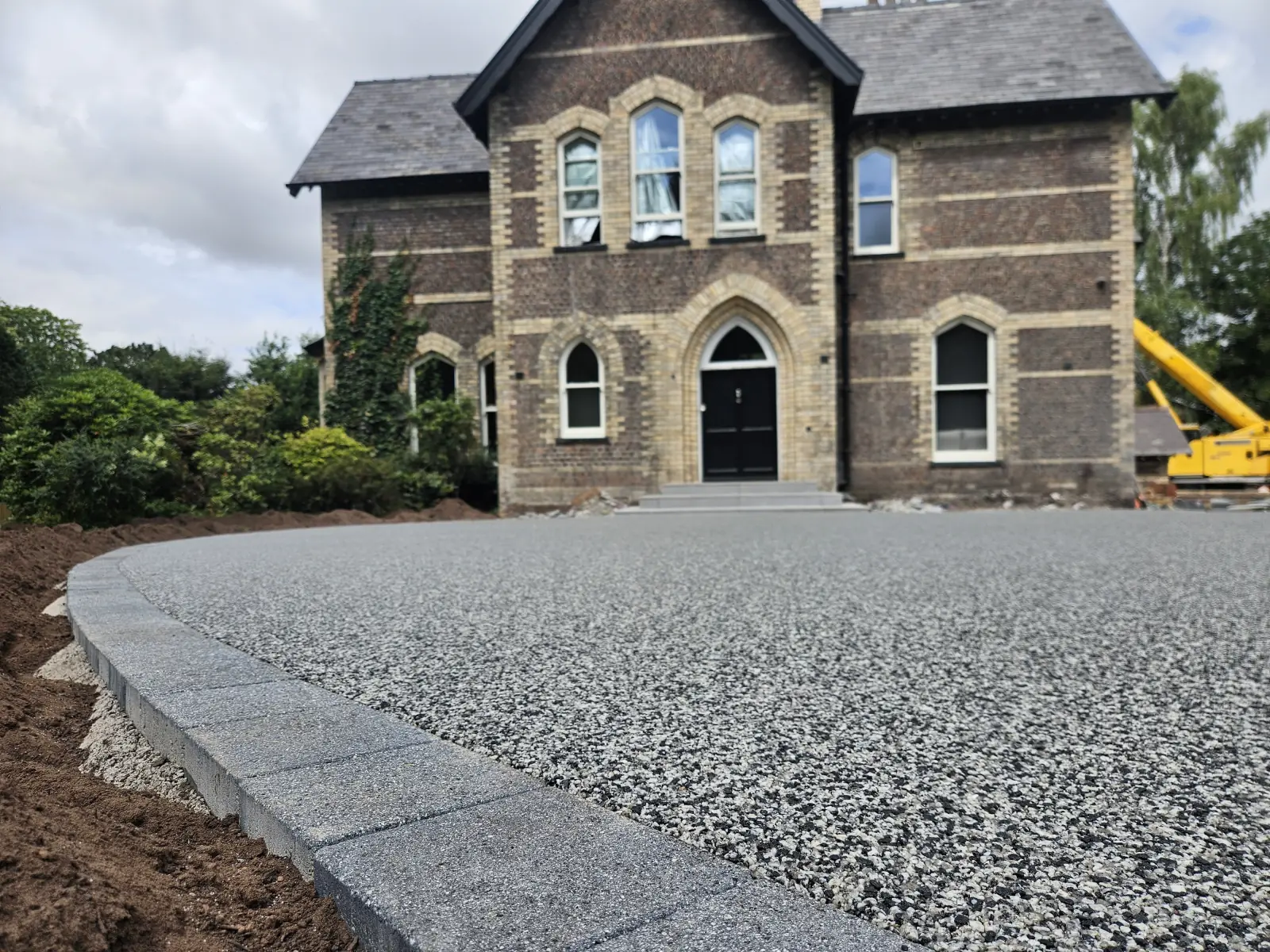
Stone and clear resin mixed together and trowelled flat, so it cures as one smooth, porous surface that rain drains straight through.
Resin spread onto a sealed base, then dry stone scattered over the top, giving a rough, grippy texture that water runs across rather than through.
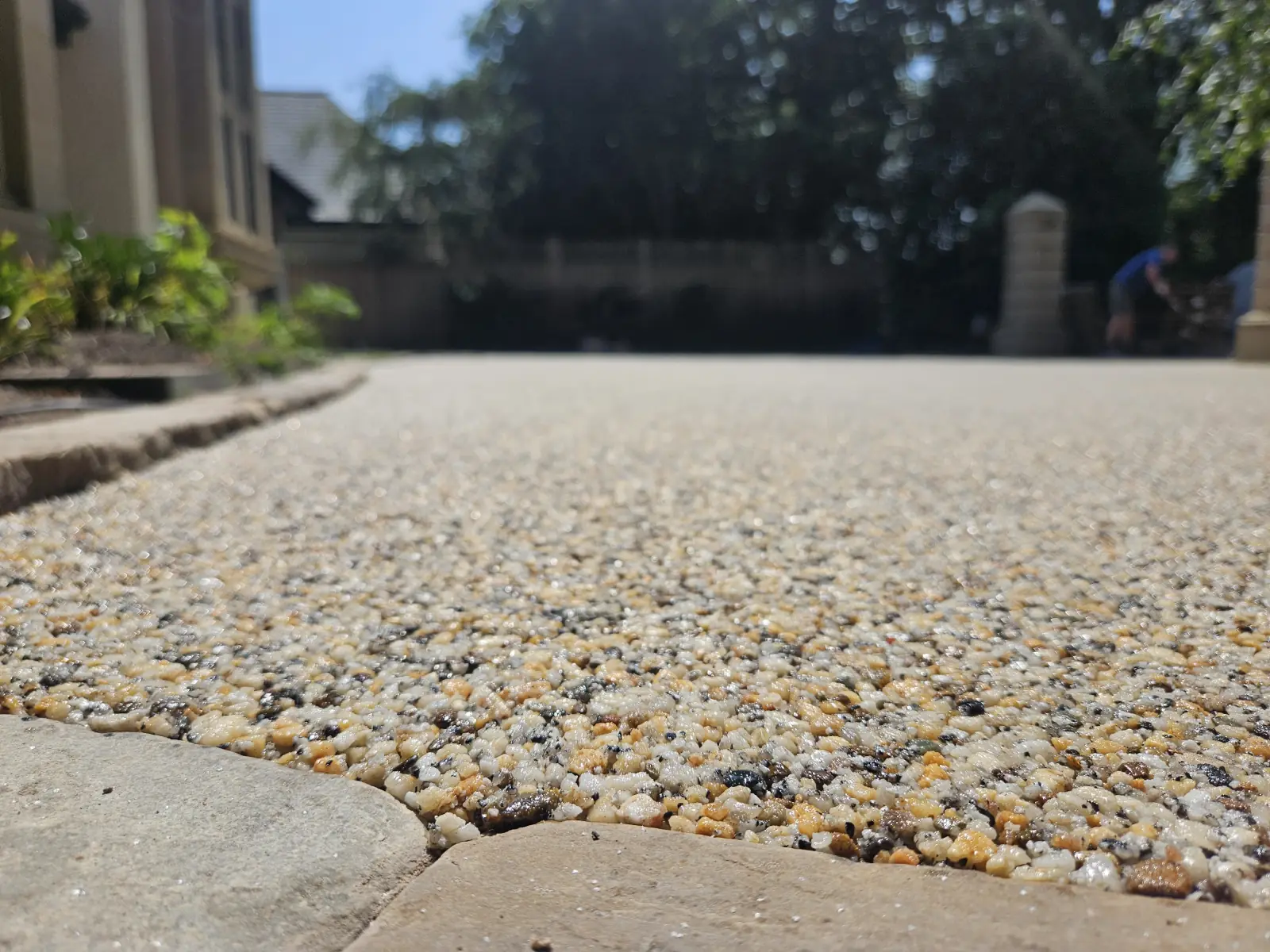
Resin bound mixes the aggregate and resin together before laying, so every stone is coated and the finish is smooth and porous. Resin bonded glues a single scatter of dry stone onto a resin-coated base, so the finish is rough and sealed underneath. Same ingredients, two different methods, two very different surfaces.
Picture the two being laid. For resin bound, the stone is tumbled with resin in a forced mixer until it is fully coated, then spread and hand-trowelled to a flat, even thickness. The stones lock to each other with open channels left between them, which is where the water goes. For resin bonded, the installer paints resin onto a solid base and broadcasts loose stone over the wet resin; only the bottoms of those stones stick, so the surface stays textured and the base beneath stays sealed.
That is the root of every practical difference on this page. It is also why the two should not be sold as interchangeable. Resin bound is the surface most people picture when they imagine a modern resin driveway, and it is the one we specialise in across every resin bound driveway we lay.
Resin bound is permeable; resin bonded is not. Because bound keeps open channels between the stones and sits on a free-draining base, rain soaks through it into the ground. Bonded is laid on a sealed surface, so water has to run off to a drain instead.
For a front driveway this is the difference that reaches the planning rules. A permeable surface, or one that drains to a border or lawn, stays inside permitted development at any size, while a sealed surface over five square metres can need an application. We set out the whole picture in our guide to permeable resin driveways and SuDS, including the official GOV.UK and Planning Portal sources.
Resin bonded can still be used compliantly, but it needs drainage designed in alongside it: channel drains, a soakaway, or a fall to a permeable area. That adds cost and complexity that a permeable bound surface simply avoids.
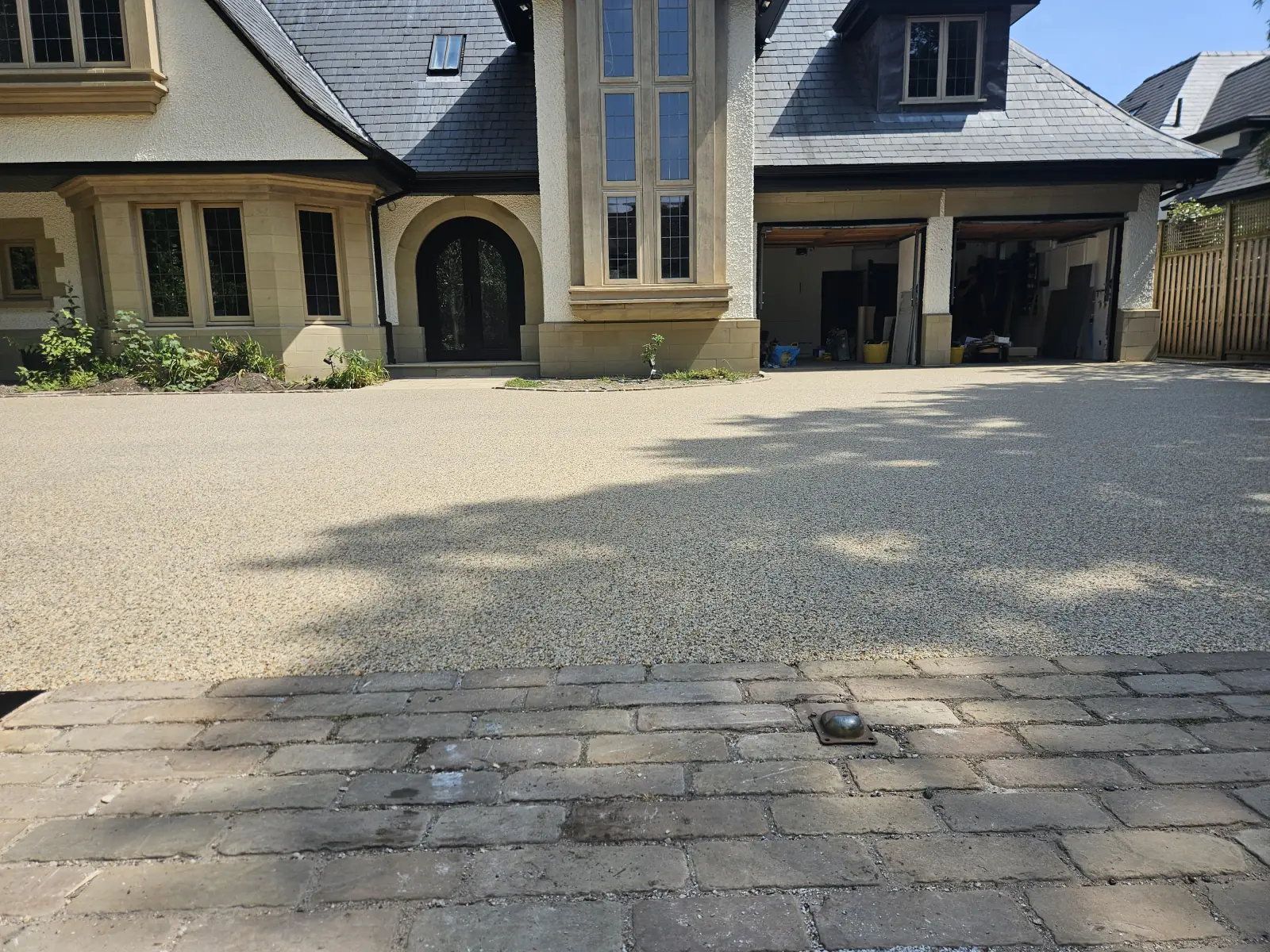
Resin bound is the smoother, more refined finish; resin bonded grips harder because its surface is deliberately coarse. Bound is still slip-resistant and comfortable underfoot, while bonded feels closer to a very fine, sharp gravel fixed in place.
If the look matters most, bound tends to win. It reads as one clean sweep of stone with no joints, sits flush against block edging and thresholds, and rolls easily for prams, bins and wheelchairs. The trade-off is only relative: bonded's rougher face offers more bite on a steep gradient, which is the one place that extra texture earns its keep.
Grip on bound comes from the aggregate itself and the open texture of the mix, and it is perfectly sure-footed for a level or gently sloping drive. For a commercial setting with a slip standard to meet, the aggregate and finish can be specified to a measured pendulum value, which we cover on our approach to resin bound surfacing.
Both are hard-wearing when laid well, but resin bound is usually the lower-maintenance of the two. With no loose stone to shed and nothing but open texture to clean, it asks for little more than a brush and a rinse. Bonded can lose some of its scatter over the first season and collects grit in its coarser face.
A quality resin bound driveway typically lasts 15 to 25 years with basic care, helped by a UV-stable resin that holds its colour rather than yellowing in the sun. The upkeep is genuinely light, and we walk through all of it in our resin driveway maintenance guide.
Resin bonded is durable too, and its grip makes it a long-serving choice on ramps. Its maintenance story is just a little busier: the open scatter holds more surface dirt, and the loose stone that works free early on needs sweeping up. Neither surface is high-effort, but bound is the one you can mostly leave alone.
The two land in a similar range per square metre, so cost is rarely the deciding factor on its own. Resin bound driveways typically start from around £50 per square metre; resin bonded sits close by, and on either surface the base condition moves the figure more than the resin choice does.
What actually swings a price is what is underneath. Laying over sound concrete costs less than a full dig-out on tired ground, and access, area, edging and aggregate grade all play a part. With bonded you should also budget for the separate drainage it needs to meet the rules, which can close or reverse any headline saving. Indicative only. Your real figure comes after a free site survey, once we have seen what is under the old surface.
For real figures beside block paving, tarmac and gravel, our resin driveway cost per square metre guide breaks down what the price includes and what moves it.
Resin bonded earns its place where grip beats everything else: steep ramps, sloped approaches and surfaces that stay wet, where its coarse texture gives tyres and feet the most to hold on to. It is a genuine, honest option, and we would rather point you to it than oversell bound where bound is the wrong tool.
On a sharp incline into an underground car park, or a steep driveway that ices in winter, the extra bite of a bonded surface can be the safer call, provided the drainage is designed alongside it. It is also used where a deliberately rough, anti-slip finish is wanted and permeability is not a requirement.
We do not run a separate bonded service page, because bound is what we build day in, day out and we would rather be straight about that than pretend otherwise. If your project genuinely calls for bonded, say so at the survey and we will give you honest guidance, including whether another installer is the better fit.
We specialise in resin bound because it suits the work most of our customers want: a smooth, permeable, good-looking driveway or patio that meets the drainage rules and stays low-effort for years. It is the surface we have refined across thousands of square metres as part of the Soft Surfaces Group.
Specialising means our crews lay the same system to the same standard every time, from the open-graded sub-base to the trowelled finish, with the aggregate blends and edging detail dialled in. That consistency is hard to match when a team spreads itself thinly across every surface going. Backed by the group, resin specialists since 1997 and CHAS and ConstructionLine accredited, it is work we stand behind.
If you are weighing the two for your own project, the quickest way to a clear answer is a free survey: we will look at the site, talk through grip, drainage and finish, and quote the surface that genuinely fits.
Book a free site survey and we will recommend bound or bonded for your project honestly, then give you a firm quote with no obligation.