
Commercial resin bound surfacing
Durable, permeable, slip-resistant surfacing for car parks, schools, public realm, retail and healthcare sites, surveyed, specified and laid to standard across the UK.
Resin bound is a commercial surface in its own right, not only a smart driveway finish. The same hand-trowelled, SuDS-friendly system that suits a home scales to a car park or a school courtyard once the sub-base is engineered for the load it has to carry.
What is commercial resin bound surfacing?
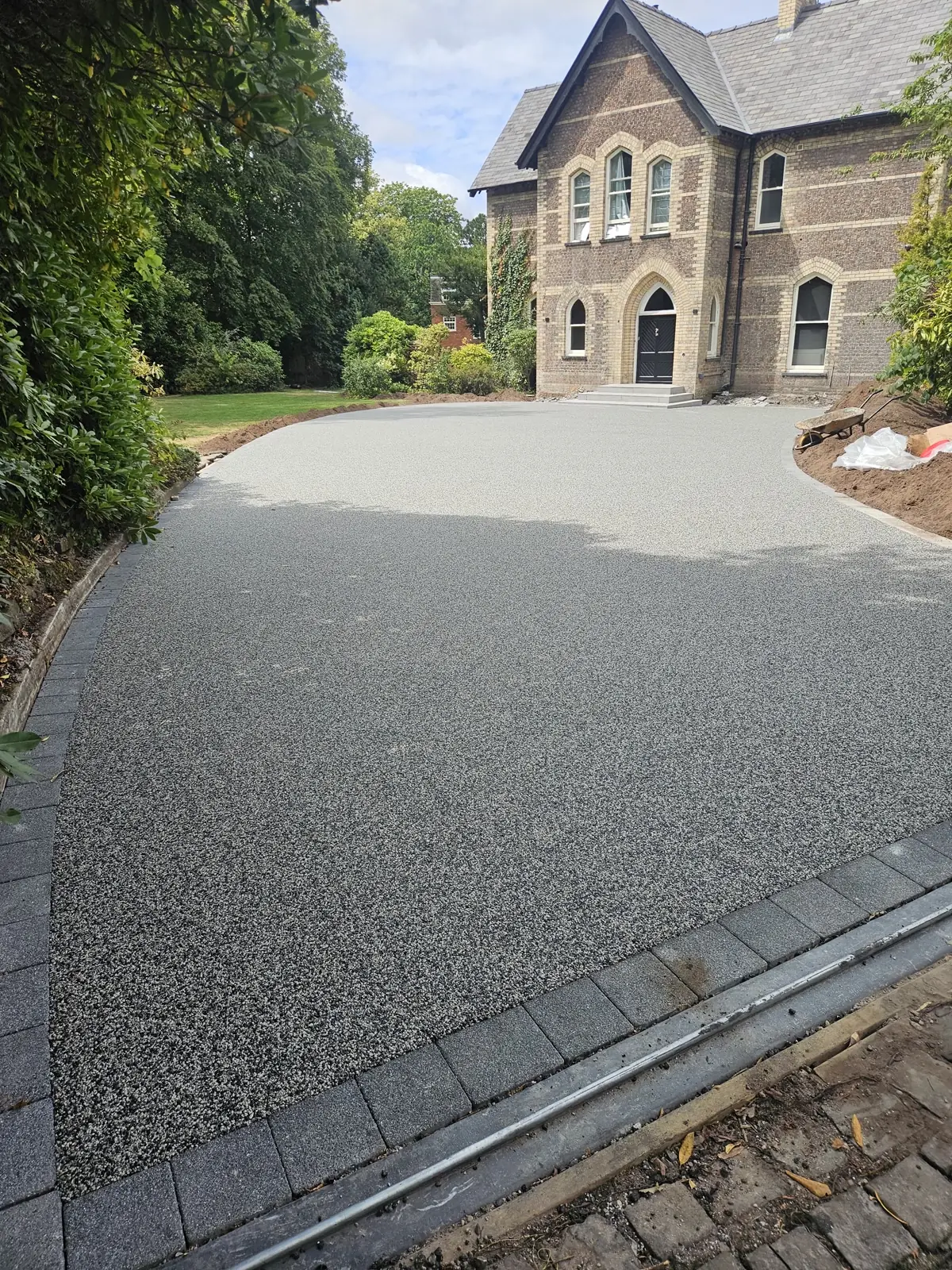
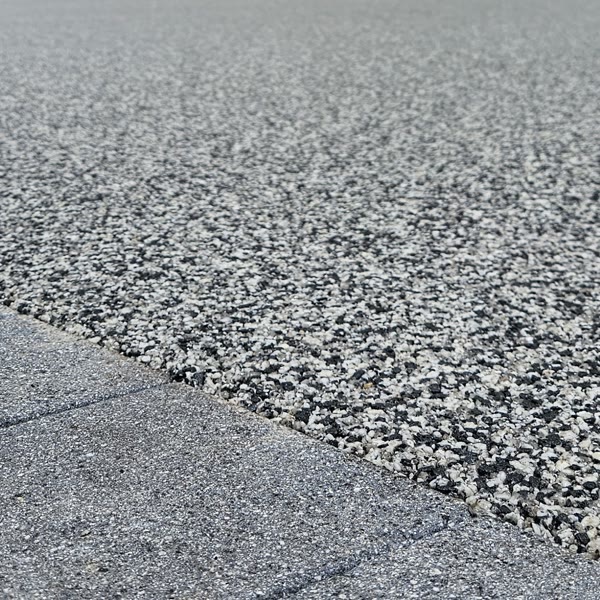
Commercial resin bound surfacing is washed, kiln-dried aggregate mixed with a UV-stable polyurethane resin and hand-trowelled over an engineered permeable sub-base. It cures as one smooth, porous surface, so water drains straight through and there is no loose stone to scatter across a trafficked site.
It is the same material as a resin bound driveway, specified up for scale and use. For a commercial scheme the difference sits underneath: the sub-base depth and build-up are engineered to the loads and ground conditions, and the aggregate is chosen for grip as well as looks.
Because it is porous, a bound surface drains on the plot and supports sustainable drainage, which is often what gets a scheme past the drainage conditions on a planning approval. The regulatory detail sits on our guide to permeable surfacing and SuDS.
We install resin bound, the porous, trowelled finish, rather than resin bonded scatter-coat, which is not permeable. The difference between resin bound and resin bonded matters most on a commercial site, where drainage and slip performance have to be specified and checked on handover.
Where is commercial resin surfacing used?
It is specified wherever a site needs a hard-wearing surface that drains, grips and reads well under constant use. Each sector leans on a different quality of the surface, which is why the specification changes from one to the next.
-
Car parks and forecourts
Rainwater soaks straight through a permeable bound surface, so a car park can drain on the plot instead of feeding a gully network that a planner would otherwise want upgraded.
-
Schools and nurseries
There is no loose stone to throw or trip on, the finish is soft underfoot, and a bright aggregate marks out play and circulation zones without painted lines that wear off.
-
Public realm and footpaths
Town-centre paving, park routes and seafronts get a continuous, step-free surface that takes constant footfall and reads as a considered piece of landscaping.
-
Retail and leisure
A clean approach does real work on first impressions, and the surface can be laid in sections overnight so a shopfront or entrance stays open through the programme.
-
Healthcare and care homes
Wheelchairs, trolleys and walking frames need a firm, even run with no ponding, which a hand-trowelled resin surface gives from the door to the car park.
-
Offices and business parks
Entrances, pathways and courtyards carry the building standard outside, and the colour holds under sun and salt where block paving fades and tarmac greys off.
Every one of these also runs on our resin bound surfacing for driveways, patios and paths, and feeds the same UK-wide installation programme.
Is it slip-resistant and accessible to standard?
Yes to both, and both are set out in the specification. Slip resistance is measured on the finished surface, and the surface is laid firm, even and step-free so it meets accessibility duties. That lets a specifier buy to a number and check against it on handover.
- BS EN 13036-4 Slip resistance (Pendulum Test Value)
- How slippery the finished surface is when wet, measured with a pendulum tester on site. A higher Pendulum Test Value means a lower slip risk, and we specify the aggregate and finish to meet the value your scheme needs. Source .
- BS EN 1097-8 Aggregate grip over time (Polished Stone Value)
- How well the stone keeps its grip as years of traffic polish it smooth. We pick aggregates with a Polished Stone Value suited to the footfall or vehicle load the area will see. Source .
- Equality Act 2010 Accessible to standard
- A firm, even, continuous surface with no loose stone and no raised edges, flush with thresholds, so wheelchairs, prams and walking frames run clean across it. Source .
- HSE slips and trips Duty of care underfoot
- Slips and trips are the most common cause of injury in UK workplaces and public areas, so a measured slip-resistant surface is part of the duty of care a site owner carries. Source .
We do not quote a single slip value for every job, because the right target depends on the site. Tell us the duty, from a care-home entrance to an HGV yard, and we specify an aggregate and finish to suit, confirmed at survey.
How does it handle load and heavy use?
A resin bound surface is only as strong as what sits under it, so load is carried by the engineered sub-base and spread across it by the bound wearing course. Get the build-up right and the surface takes foot traffic, cars and vans comfortably, with heavier yards specified deeper.
The wearing surface itself resists scuffing, oil and weather, and the UV-stable resin holds its colour where block paving fades and tarmac greys off. There are no joints to open up and no loose stone to migrate, which is what keeps a busy entrance looking maintained rather than tired.
On lifespan we stay honest: a well-built commercial surface typically lasts 15 to 25 years with routine cleaning, though real life depends on the traffic and the base beneath. Indicative only. Your real figure comes after a free site survey, once we have seen what is under the old surface.
For a like-for-like read on where the money goes, our guide to resin surfacing cost per square metre sets out what moves the price on a larger scheme.
What groundworks and sub-base does a scheme need?
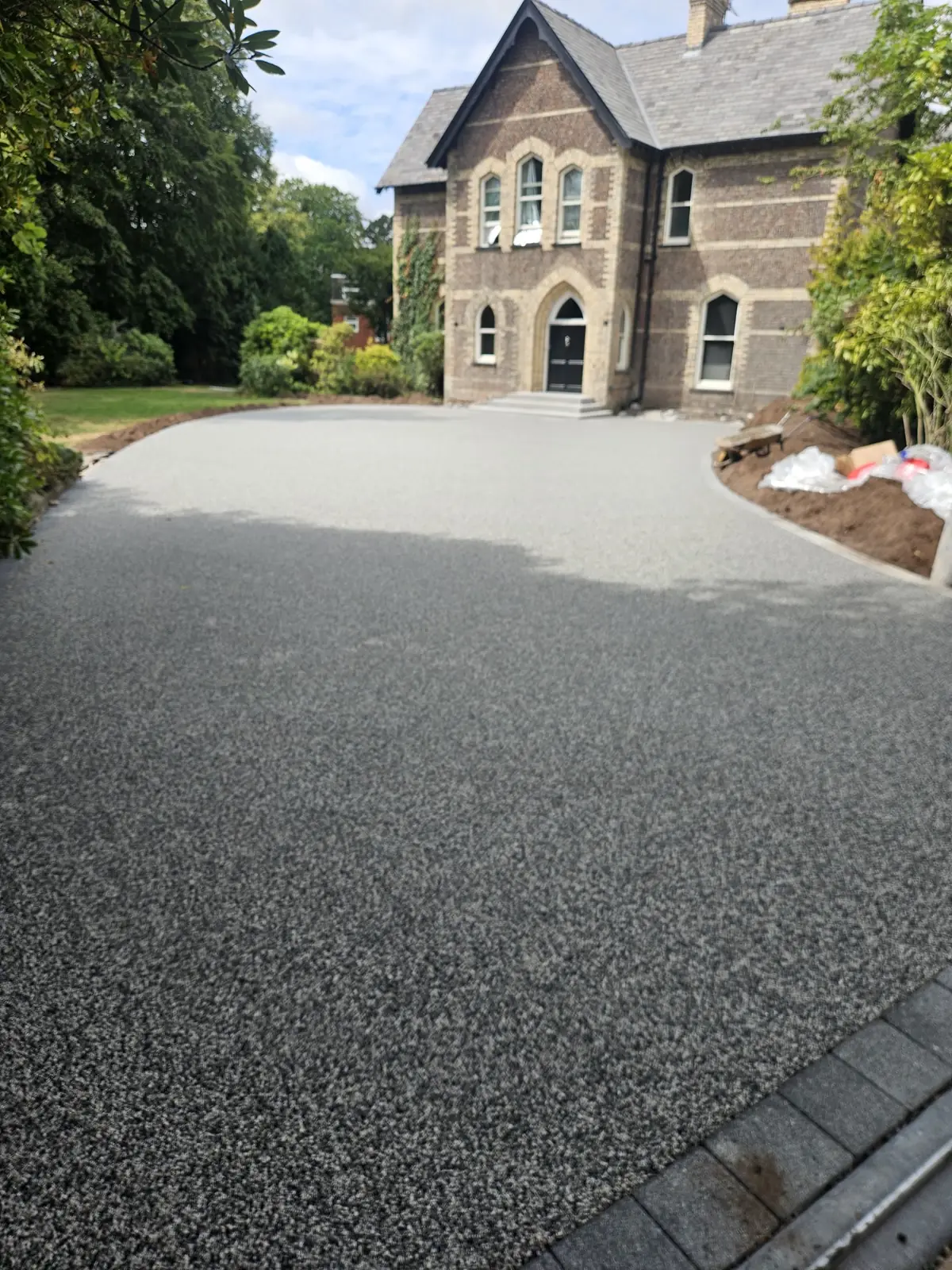
The groundwork is the job. A permeable resin surface sits on an open-graded sub-base, usually an open MOT Type 3 or similar, laid to a depth engineered for the load and the ground, with edge restraints and the right falls. That build-up is what carries traffic and lets water through at the same time.
- We do the groundworks too. There is no separate groundworks page because it is part of the scheme: excavation, sub-base, edgings and drainage are surveyed, specified and priced with the surface as one job.
- Depth is engineered to the load. A footpath and an HGV yard need very different build-ups. We test what is already there at survey and set the depth to suit, so indicative figures firm up once we have seen the ground.
- Drainage is designed in. An open sub-base lets the surface drain through to the ground, which is how resin bound stays SuDS-compliant on a commercial site and keeps water off the finished area.
- Overlay where it is sound. Where an existing concrete or tarmac base is solid and drains, we can lay over it, which cuts the dig and the cost. Where it is not, a full excavation is the honest call.
How do you deliver a commercial scheme?
Through a surveyed specification and a phased programme that keeps your site running. We price off a real survey, write down exactly what will be laid, and sequence the work so a car park or entrance stays usable while we are on site.
- 1
Site survey
We visit, measure the areas, test what is under the existing surface, check falls and drainage, and note access, traffic and opening hours. Nothing is priced off a drawing alone.
- 2
Written specification
You get a specification that names the aggregate blend, the sub-base build-up, the target slip value and the areas and depths, so the surface can be checked against the standard it was specified to.
- 3
Phased programme
Larger sites are poured in sections and, where needed, out of hours, with traffic management, so a car park, entrance or walkway keeps working while the rest is laid.
- 4
Handover and guarantee
We hand over a finished surface, the aftercare notes and a workmanship guarantee set out in your written specification, with the installing team named on the paperwork.
What accreditations and guarantees do you hold?
The ones a commercial buyer checks before awarding work. That Resin Stuff is the resin arm of the Soft Surfaces Group, trading since 1997 and accredited for the health, safety and pre-qualification standards a main contractor expects, which is the track record a new name on a site cannot borrow.
Finished work is backed by a workmanship guarantee set out in your written specification, with the installing team named on the paperwork. Accreditation status is confirmed current at tender. The full story, the group and the people sit on our page about the Soft Surfaces Group.
- Trading since
- 1997
- Health and safety
- CHAS accredited
- Pre-qualification
- ConstructionLine
- Trade body
- API member
- Registered company
- No. 03400473, Wilmslow
- Part of
- the Soft Surfaces Group
How do you specify and request a quote?
Send what you have and we turn it into a priced specification. We come out, survey the site and come back with a written spec and a firm price, so your enquiry turns into something you can put in front of a client or a framework.
Useful to include with your enquiry:
- Drawings or rough dimensions of the areas, in square metres if you have them
- What the surface needs to take: footfall, cars, vans, occasional HGV
- Any required slip value, finish or colour, and any framework or standard to meet
- Your timescales and the hours the site can be worked
Ready to specify your scheme?
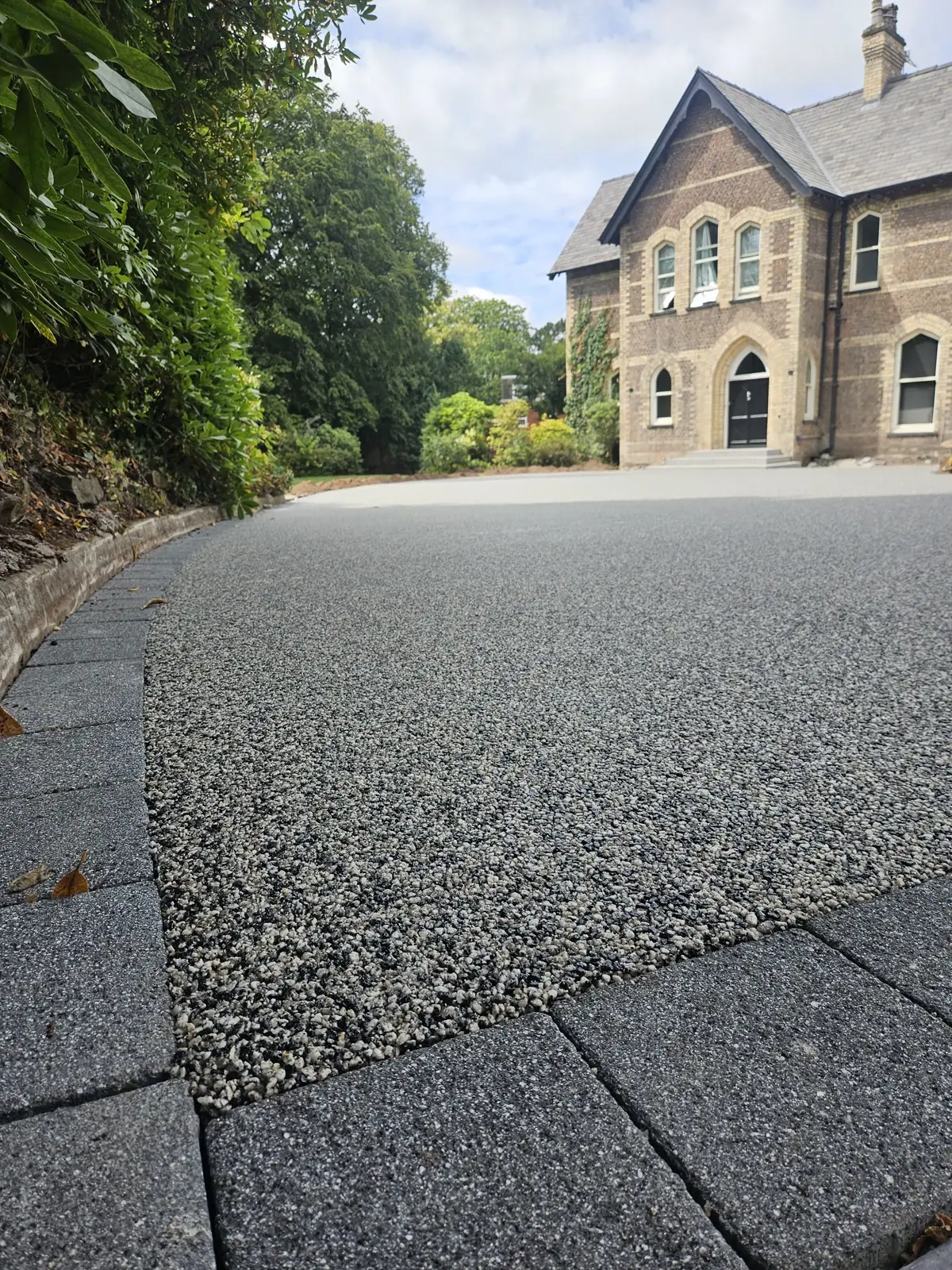
Book a free site survey and we will put a written specification and a firm price in your hands, with no obligation.